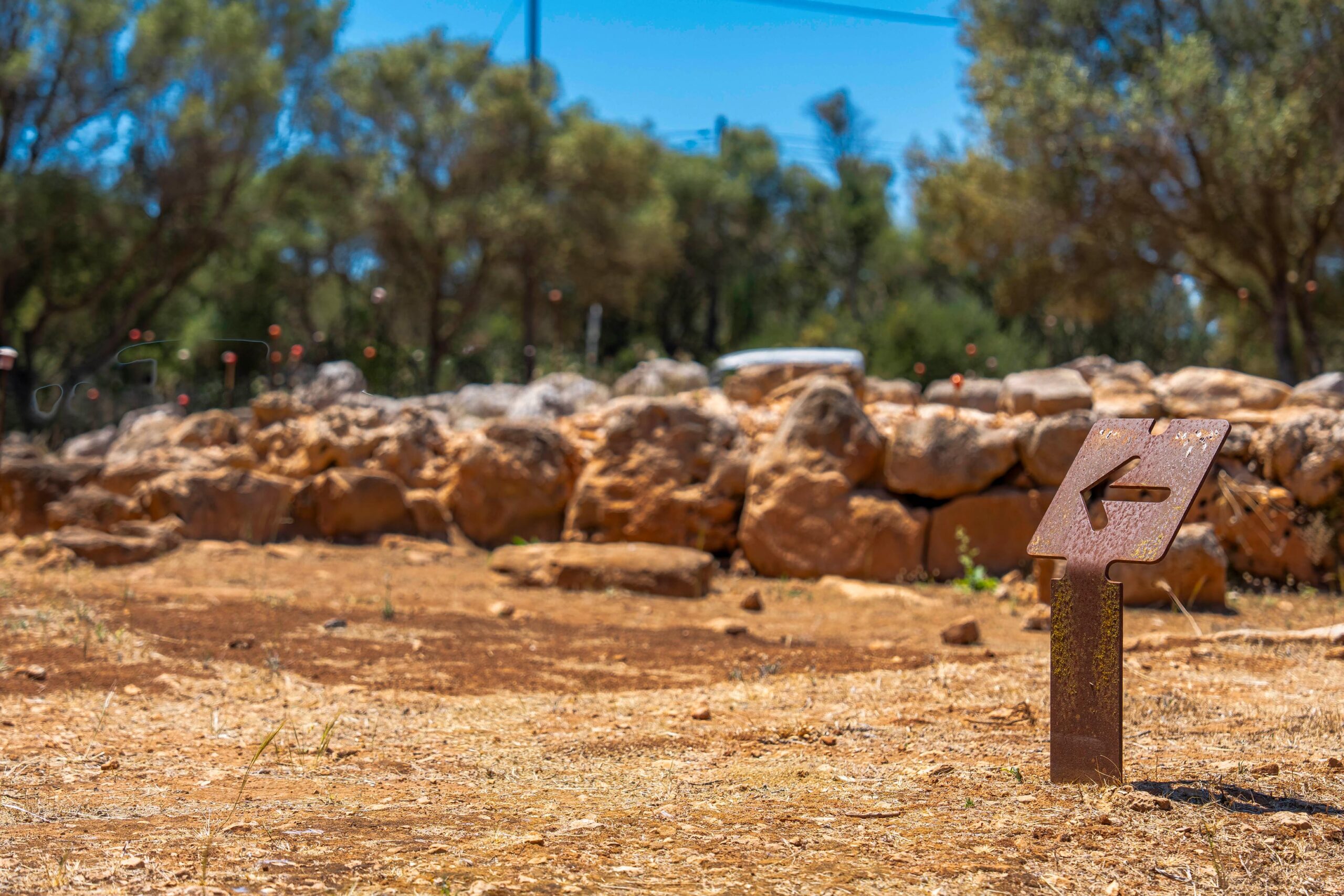
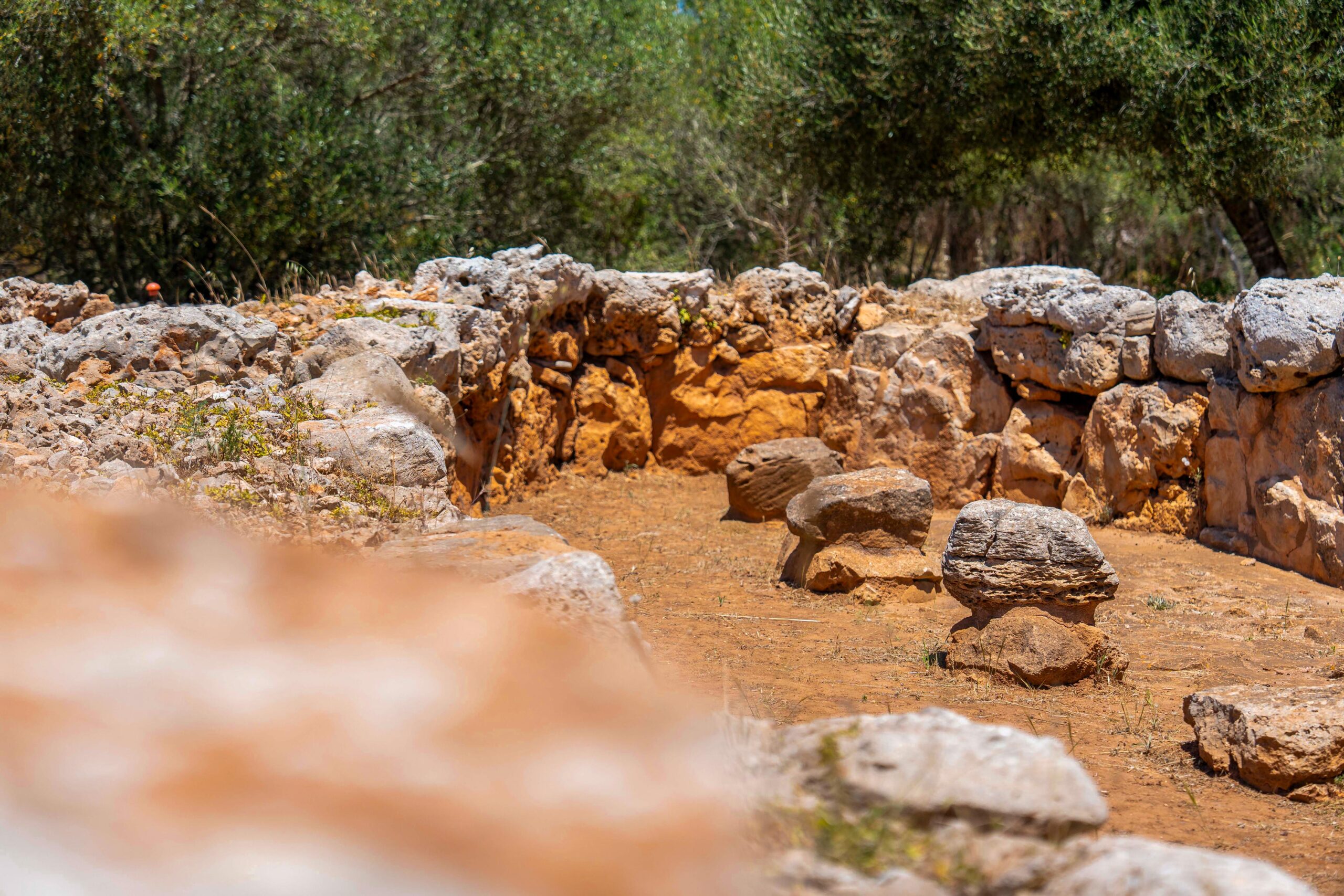
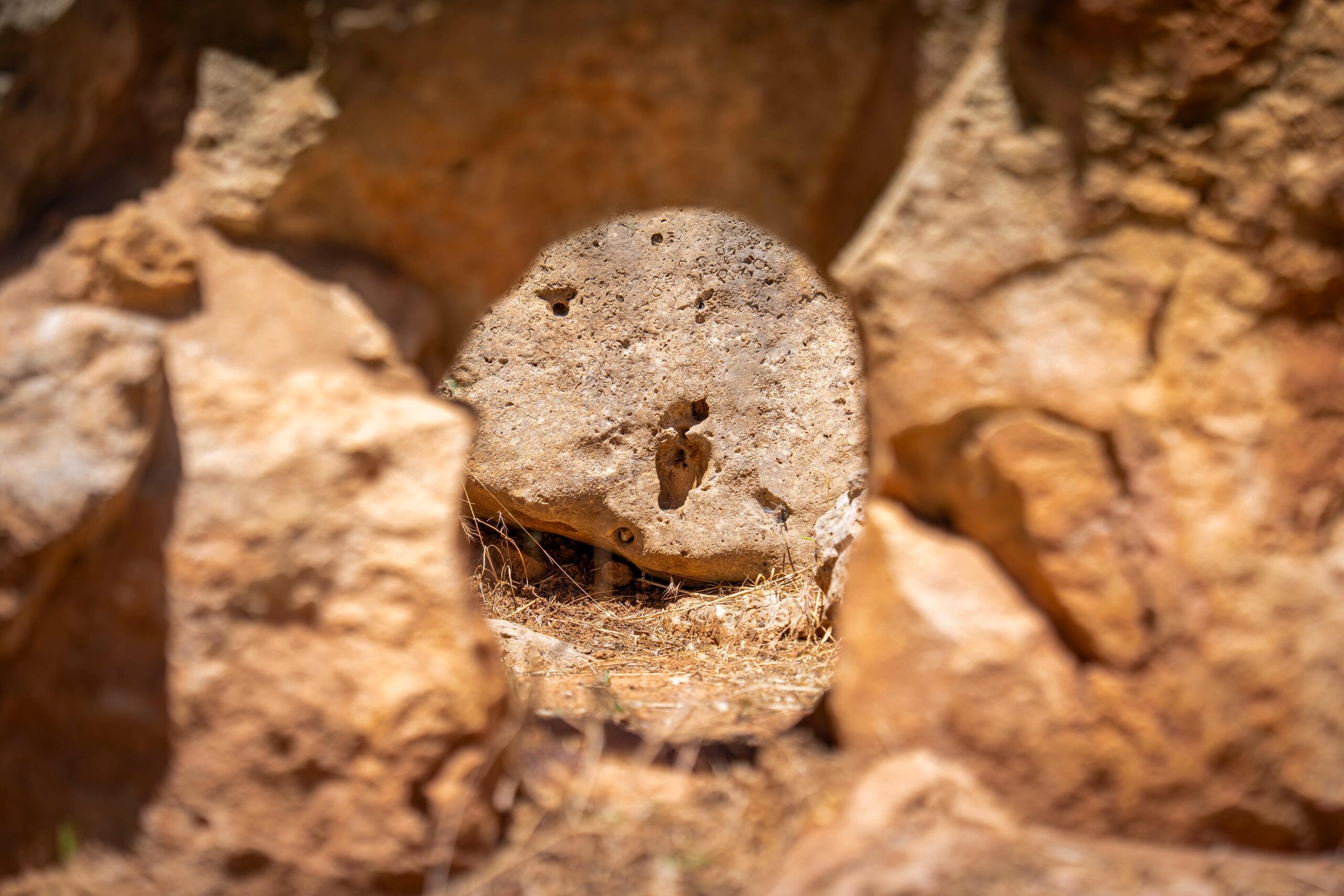
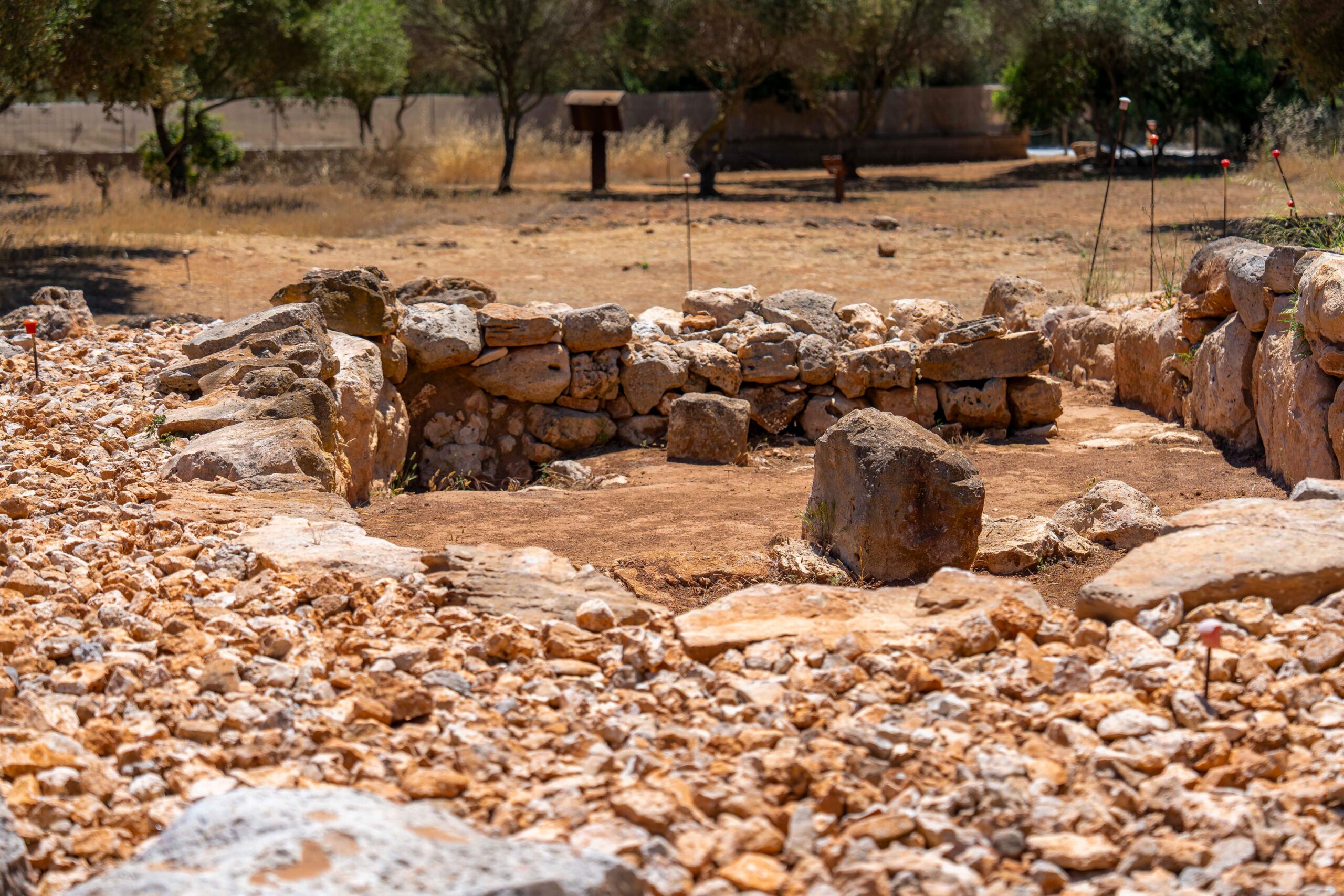
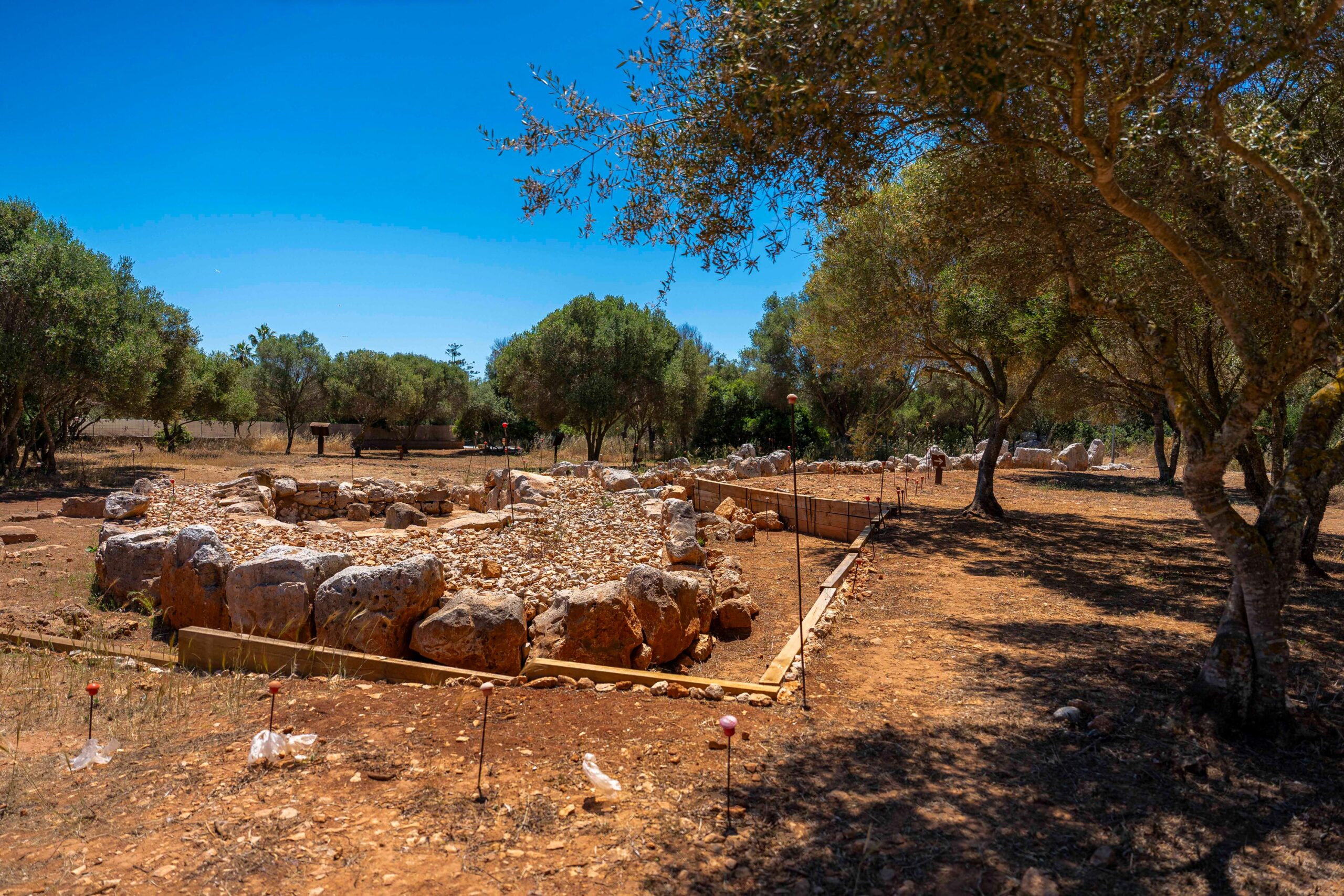
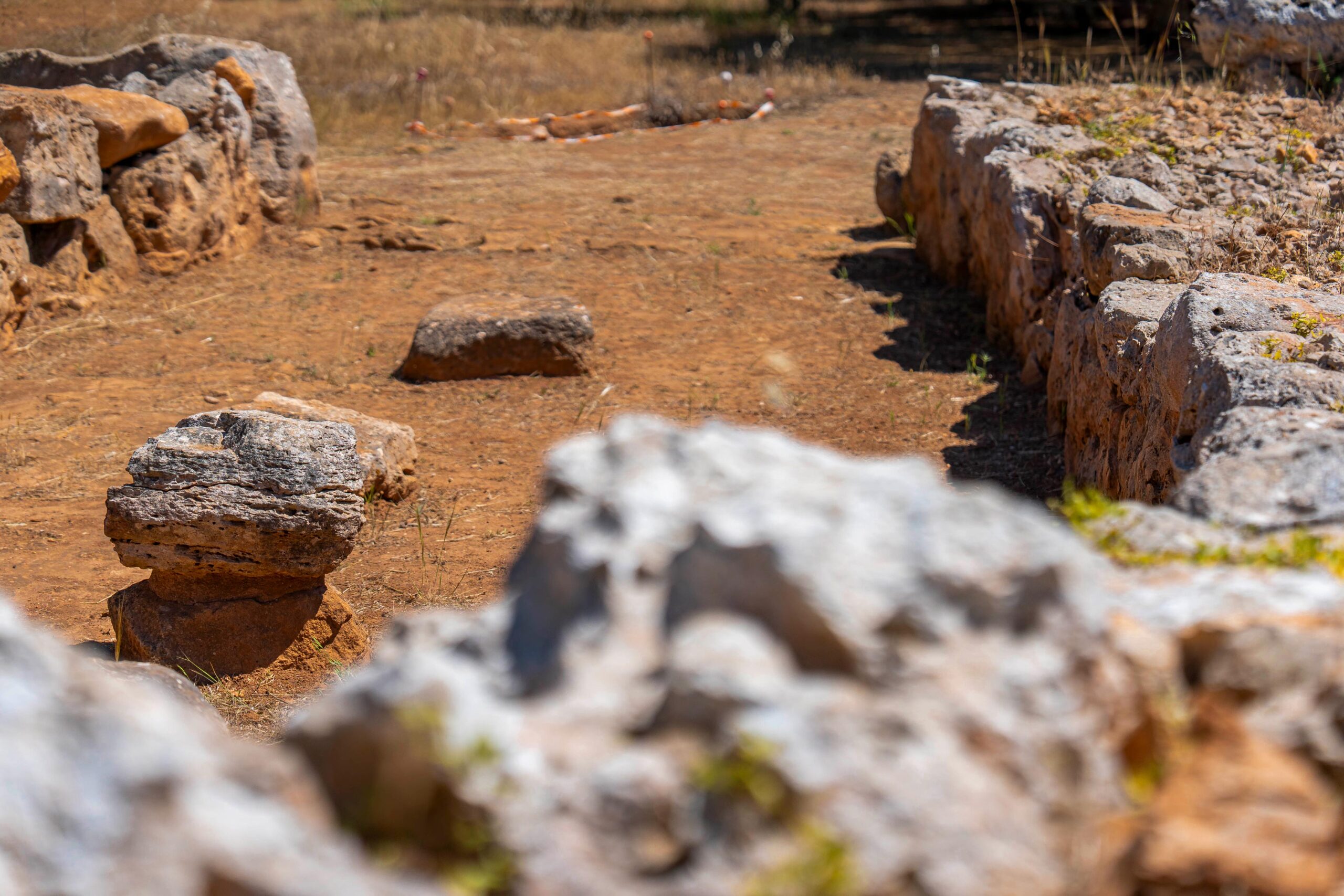
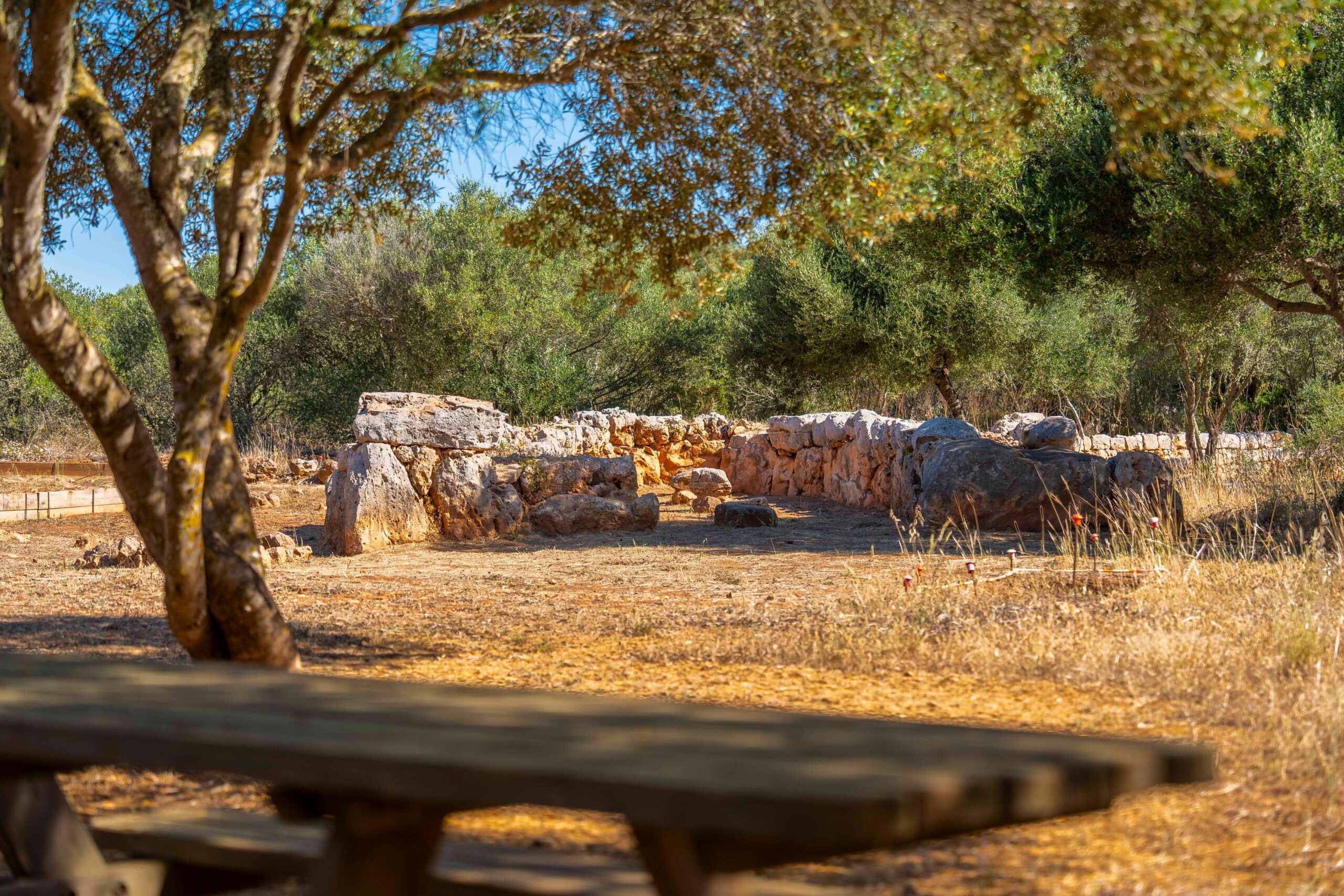
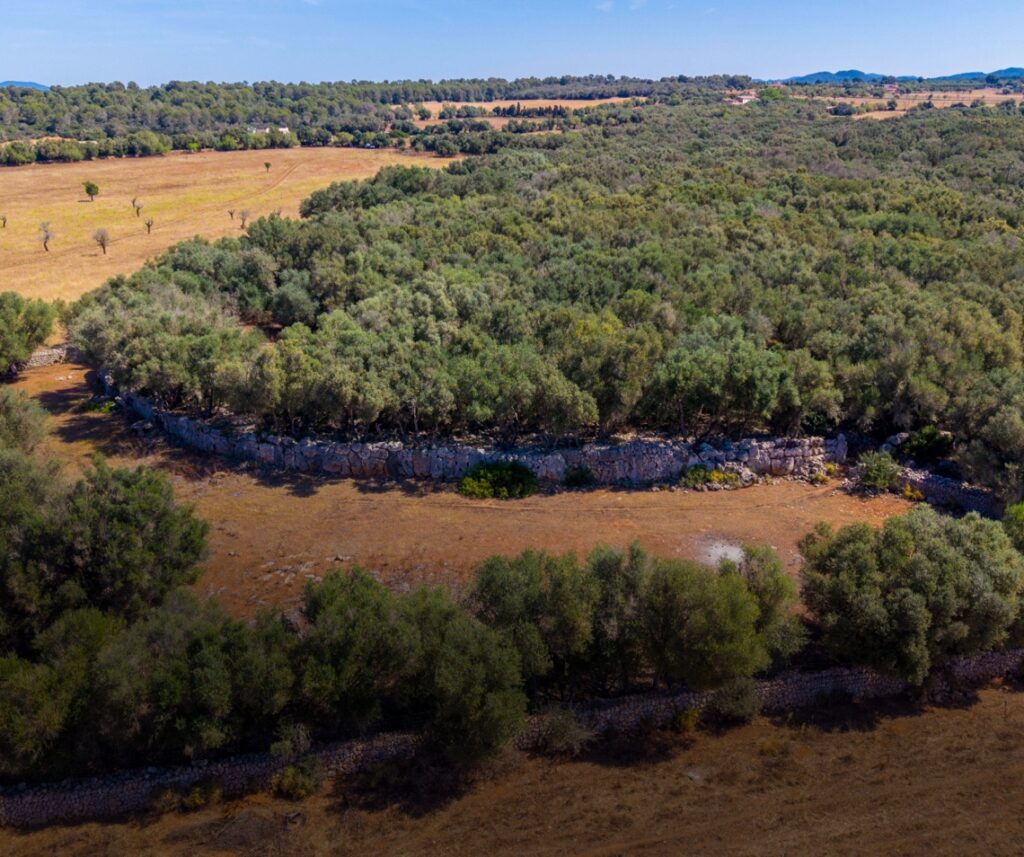
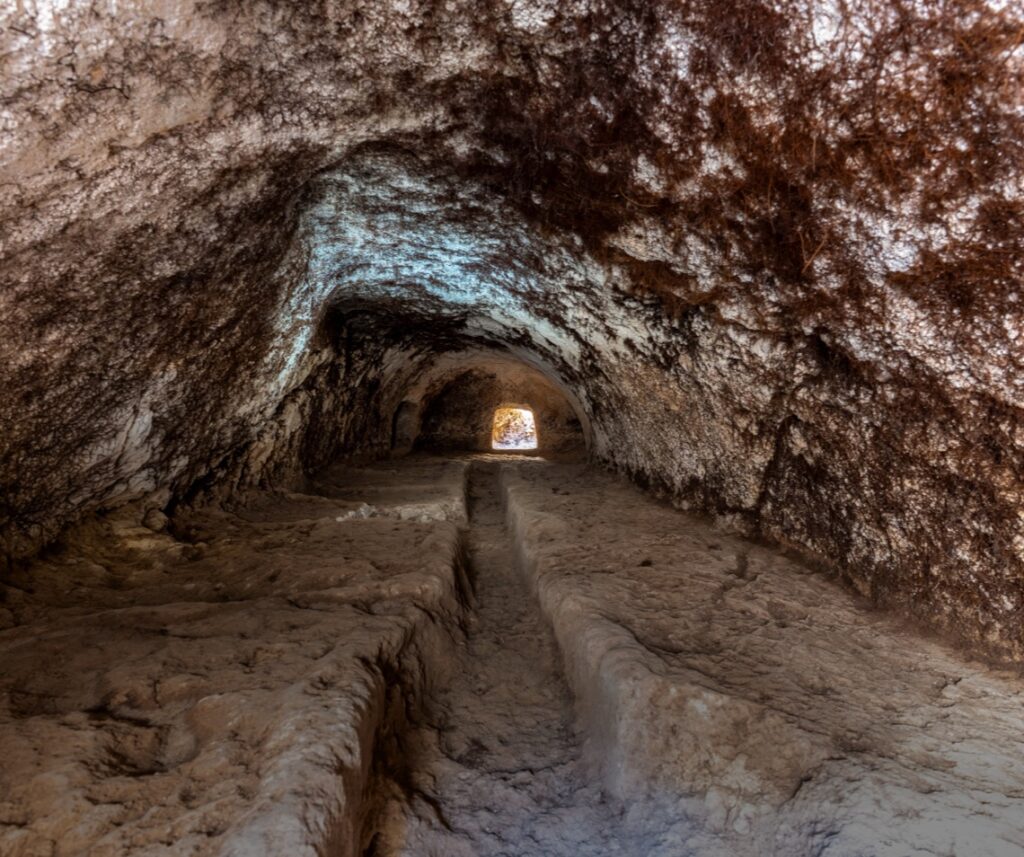
Although they lie just a few minutes from the centre of Portocolom, the Closos de Can Gaià preserve the remains of an extensive Bronze Age settlement. Several structures have been excavated, studied and restored, so you can walk around the site and get a sense of the daily life of the communities who lived here for centuries.
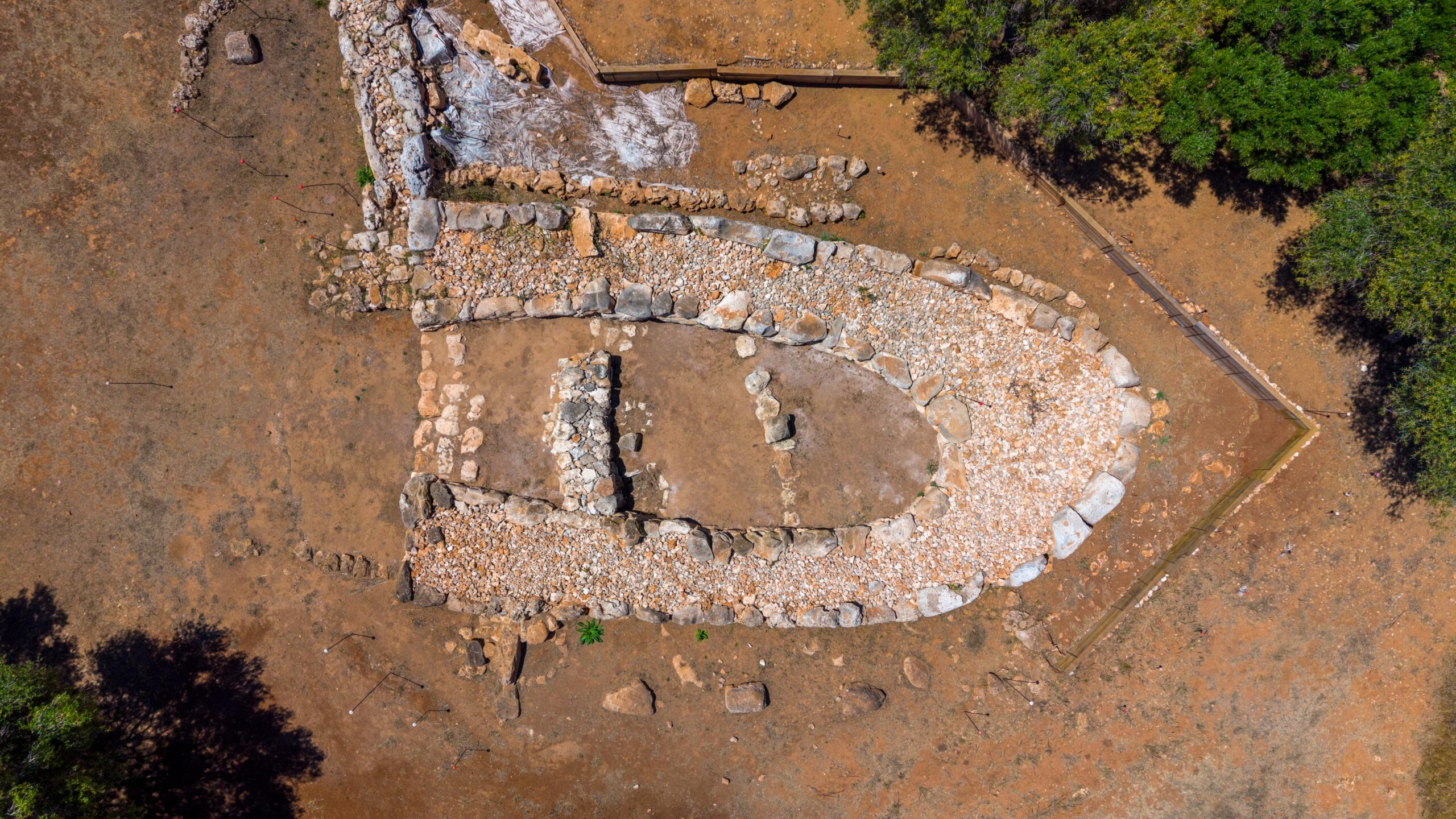
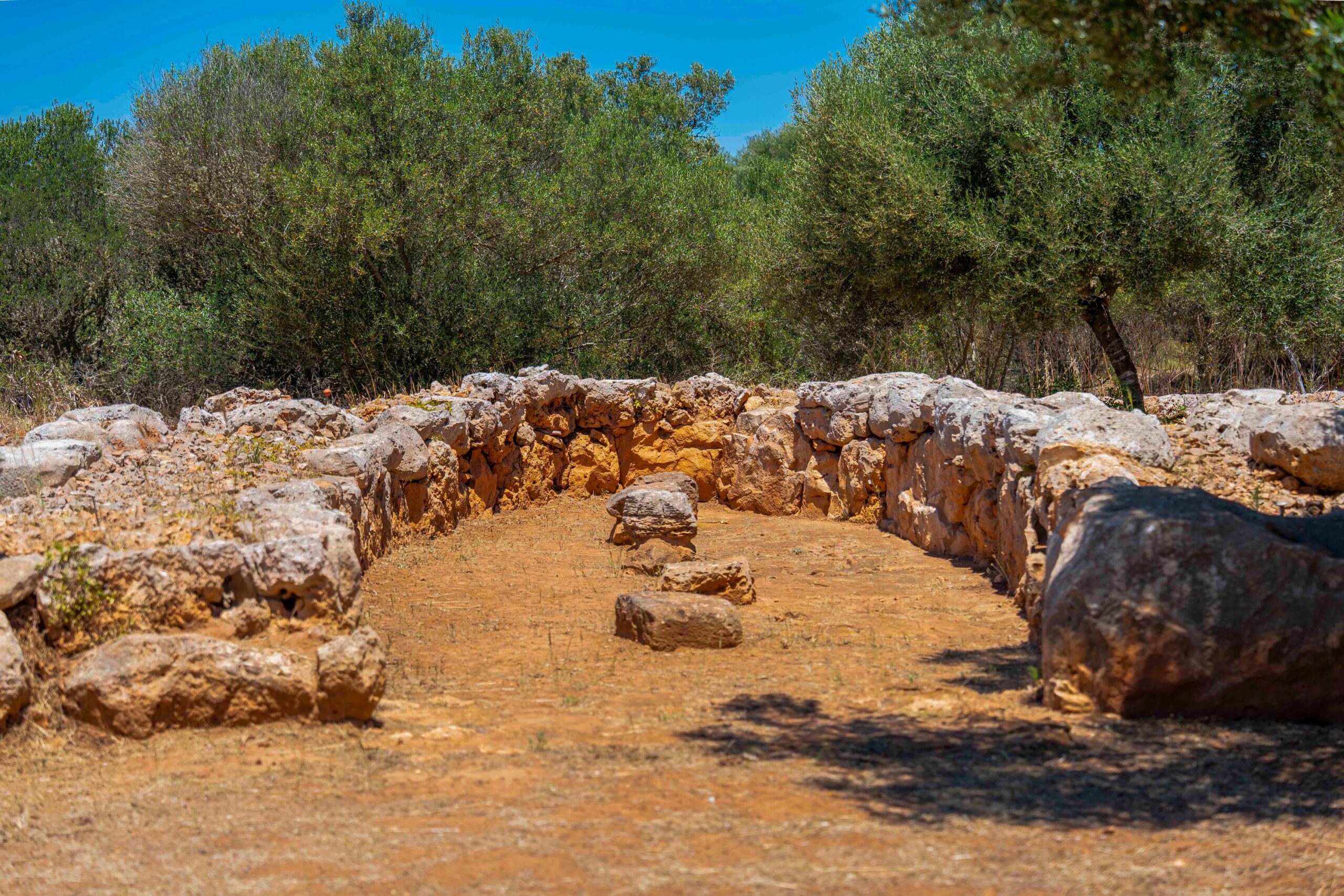
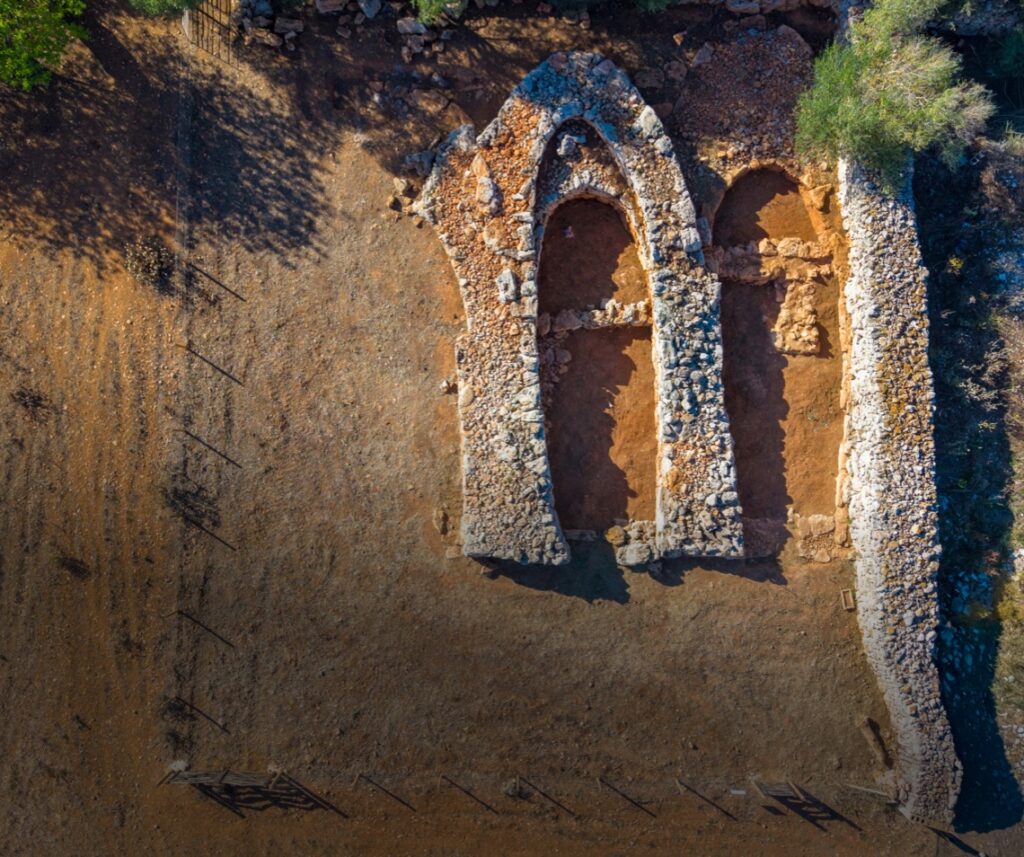
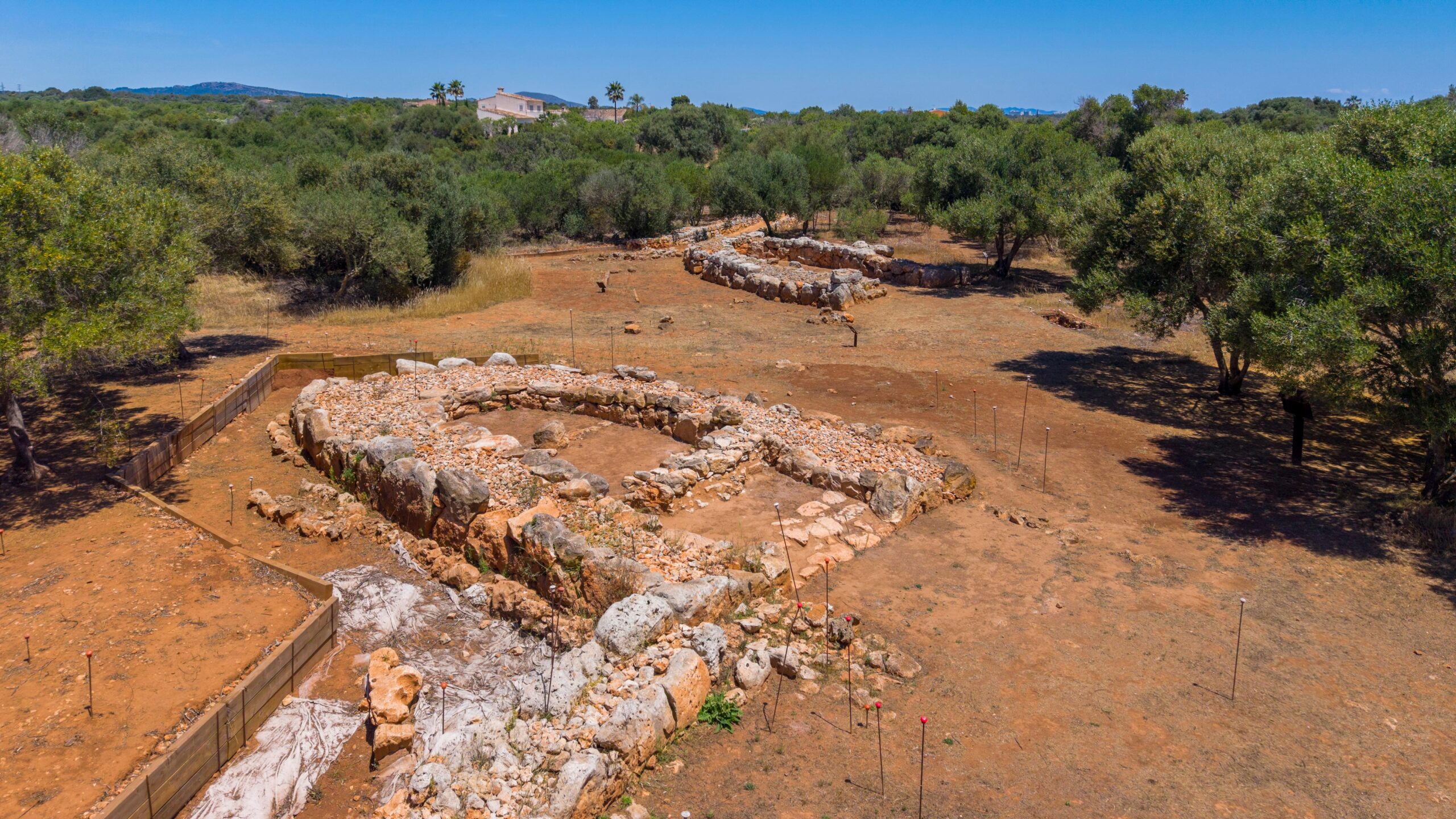
We recommend starting your visit at Naveta 1 (1), a large stone house more than 16 metres long and almost 7 metres wide. Its walls, built with huge dry-laid blocks, are up to 3 metres thick and may originally have stood between 3 and 3.5 metres high.
This building was in use for more than 800 years and underwent major changes. Today you can see features from different moments in its history: the large undivided interior, stone-slab floors, column bases and a wide entrance from the first phase, as well as a stone worktable linked to its final period of occupation. These alterations show that naveta houses were not unchanging buildings, but spaces that adapted to new needs and ways of life.
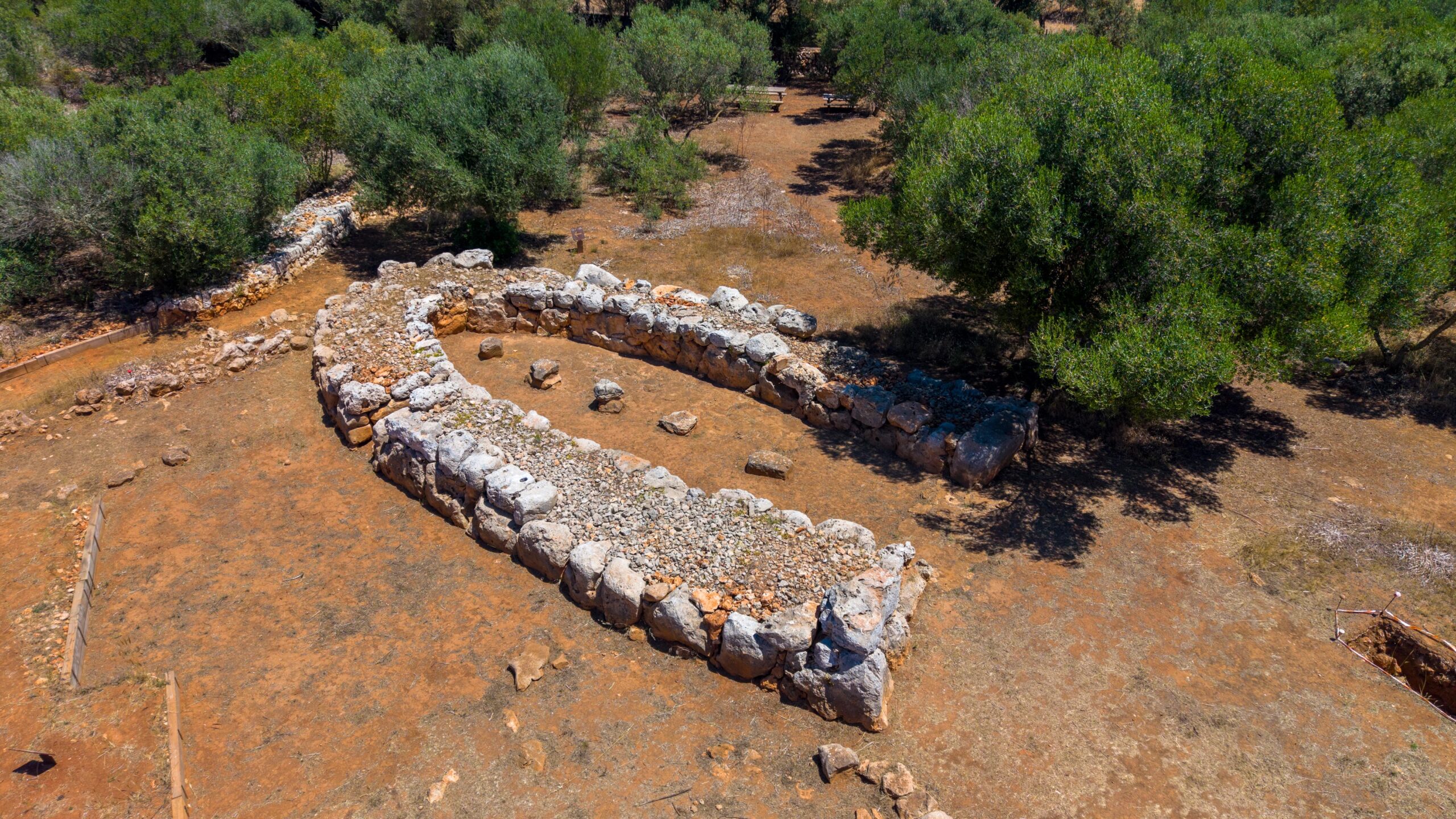
A few metres away you will find Naveta 2 (2e). Its layout is very different and belongs to a later stage in the life of the settlement. Several spaces were created inside, with a hearth, a cross wall and a small platform in front of the building. This greater subdivision reflects changes in how domestic life was organised.
Next to Naveta 2 lies Area 2 (2), a group of adjoining rectangular spaces where various tasks were carried out. Excavations have identified specialised areas: Area 2B (2b) contains numerous saddle querns; stone mortars and bone awls were found in Area 2C (2c); and Area 2D (2d) yielded abundant animal remains linked to butchery and processing.
This group of spaces is particularly interesting because it shows how some activities that used to take place inside or in front of each house were eventually moved to shared spaces. The Closos thus let us see how the organisation of work and community life changed over the centuries.
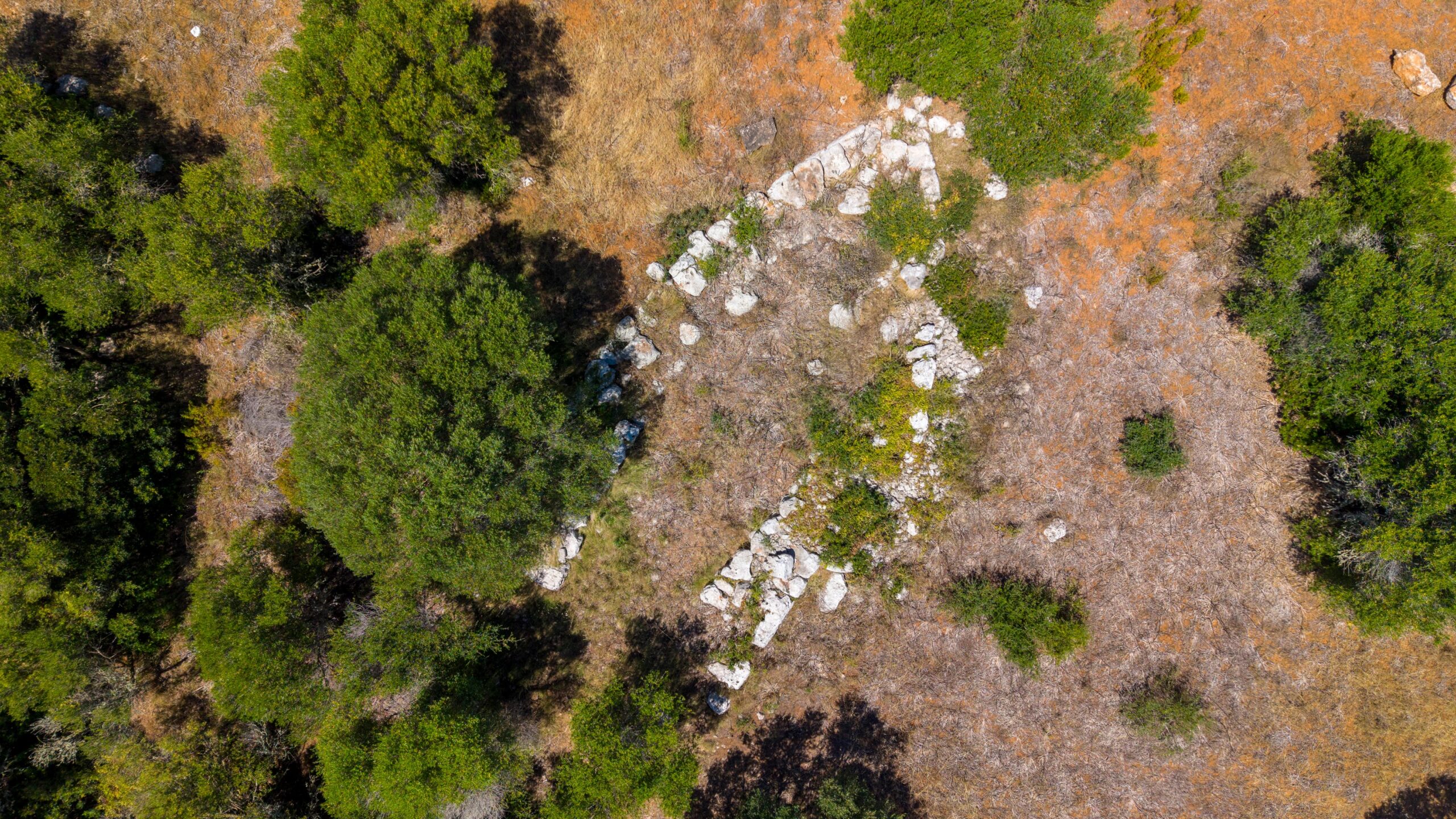
Not all the buildings in the settlement have been excavated. Along the route you will also be able to make out a triple naveta (3), a single naveta with a pointed apse (4) and a double-chamber naveta (5). Their current state reveals another side of the site: structures that are still part of the archaeological landscape, just as they have come down to us. If you would like to see in more detail what a triple naveta house was like, you can round off your visit at the Can Roig Nou site.
The visit continues with a short route devoted to prehistoric landscapes, a reminder that these communities not only built houses but also profoundly transformed the land around them. Here you will find a reconstruction of a cultivated field (6) and an area of untouched garrigue scrubland (8), together with an area that recreates the kind of garrigue these communities would most often have worked (7).
Finally, the Closos offer a range of features designed to help you experience and understand the past more directly: a sensory path (9), a simulated archaeological dig (10), replicas of stone querns (11) and an example of a bronze-smelting furnace (12).
The whole route helps you see the Closos not as a collection of isolated stones, but as the remains of a real settlement: houses, work areas, shared spaces and a landscape shaped over generations by the people who lived there.
Free admission all year round.
April – October: 8:00 am – 8:00 pm
November – March: 8:00 am – 5:00 pm
The site is privately owned and managed under a collaboration agreement with Felanitx Town Council.
20 minutes
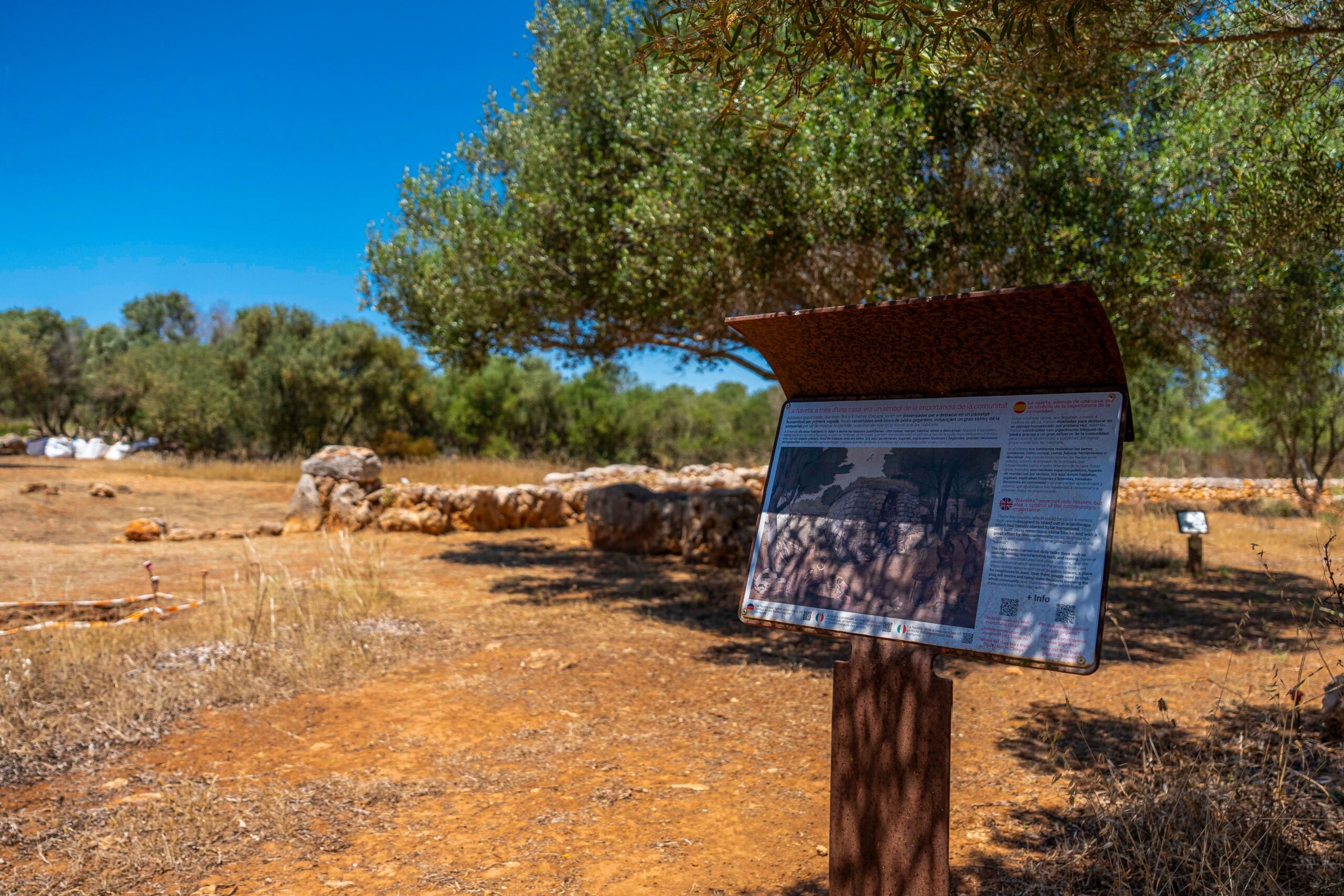
Self-guided route with an interpretive panel.
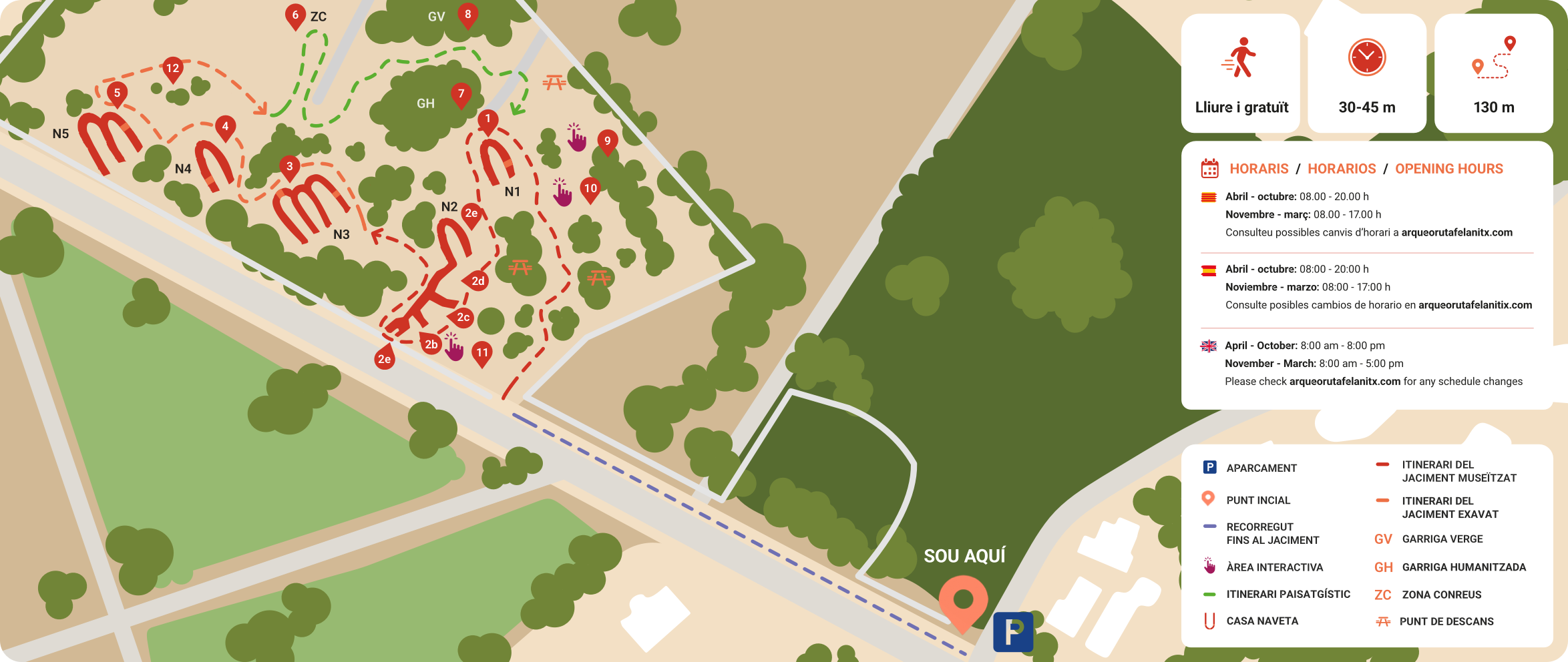
The Closos de Can Gaià are located on Camí de sa Ronda, right next to Portocolom. You can easily reach them on foot, by bike or by car from the town centre.
The easiest access is from the roundabout at the entrance to Portocolom on the Ma-4010 road, where you will find signs to the site. There is parking space right next to it.
You can also get there by public transport on bus line 512 Felanitx – Portocolom – Felanitx. The nearest stops are Vapor Santueri 2 (22047) and Ronda Nadal Batle (22035), about 300 metres from the site.




 Share